
We’re all still meant to pretend this is normal, eh?
When ruthless self-interest becomes aspirational.

An audio version of this article (by me) is available here:
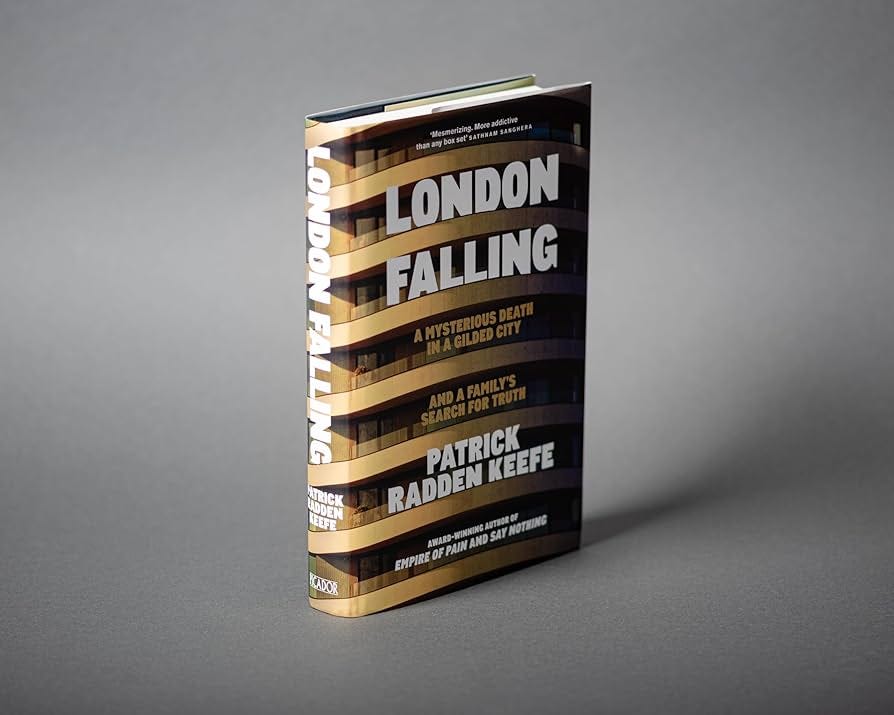
London Falling, a newly released book by journalist Patrick Radden Keefe, investigates the 2019 death of British teenager Zac Brettler. Zac fell into the Thames from the balcony of one of London’s most swanky-doodle addresses. Before his death, he had befriended dodgy businessmen and gangsters while posing as the son of a Russian oligarch.
Police eventually called it suicide, but their tap-dancing around glaring inconsistencies meant Zac’s parents didn’t buy it. The book is the culmination of their years-long fight to find out what actually happened to their son – and uncovers a London most of us only suspect exists: oligarchs, empty luxury properties owned through layers of shell companies and anonymous trusts, golden visas, non-dom statuses, informants, hitmen, drugs, and a city propped up by filthy money.
It’s a terrifically sad tale with lots of competing horrors and intrigues worth raising fists about. Yet, right now, for me, the overarching takeaway is how insanely corrupt (and incompetent) ‘the system’ is. “Which system?” I hear you ask. Well, ALL OF THEM.
The book’s underlying message is that the mega-rich and/or mega-connected can get away with anything. “Fresh take, Jo,” I hear you muttering. “Where have you been since the feudal lords?” Which is fair. However, the way multiple systems tripped over themselves not to help Zac’s parents when it appeared the facts might negatively impact wealthy and powerful people, taps into my growing rage that, sure, life is rigged – but the people doing the rigging aren’t even sheepish about it anymore.
In a time when we’re all being asked to do more for less, and pay more for less, it’s getting increasingly harder to be, “Cool, cool, cool. That’s just the way the world works” about it. We’re relentlessly banging our heads against staggering incompetence, complicity and complacency. The gap between how us ordinary plebs are expected to live and how the rich and powerful are allowed to behave no longer feels merely unfair, but openly contemptuous. Both the written and unwritten rules meant to keep us in check still exist, but increasingly only for those without enough money or clout to sidestep them. (Big hello to everyone in the Jeffrey Epstein files, by the way! Still living large, are you? Delightful!)
Greed as aspiration

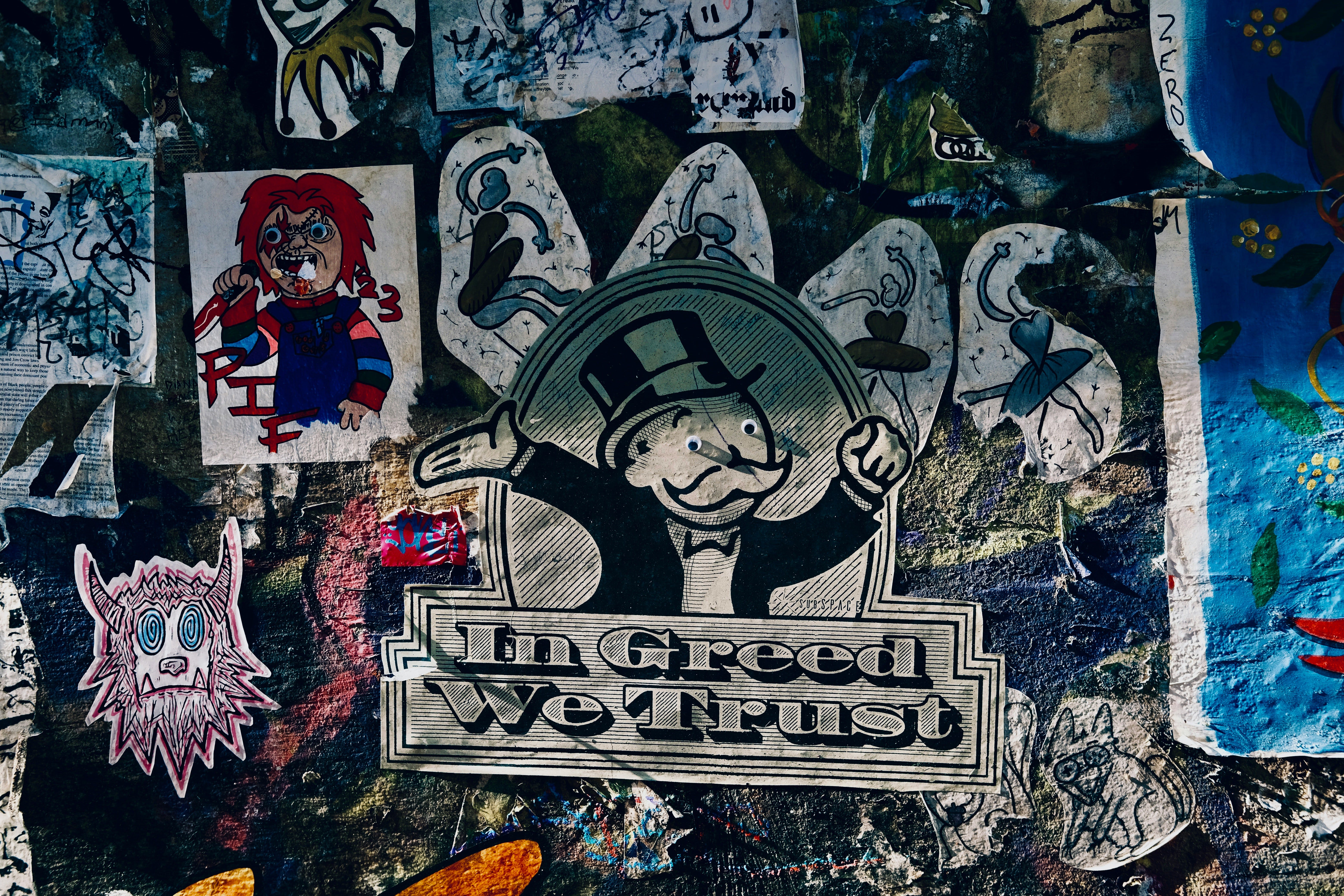
I feel like greed itself is becoming more culturally legitimised and admired. There’s a “take it if you can get it” vibe in politics and online that treats morality as naivety and ruthless self-interest as evidence of being a clever clogs. A sense that ripping people off is acceptable as long as you become visibly successful doing it. It’s a view espoused by the Trumps, Farages and pyramid-scheme-come-manosphere-style ‘life coaches’. Struggle is reframed as failure; if you’re not thriving, you’re just not trying hard enough. To me, one of the maddest bits of Louis Theroux’s recent doc on the manosphere was when an online influencer openly admits to fleecing his fans… on camera! To said fans! And they don’t care! It’s all in the game, son.
In London Falling, Zac became so seduced by the world of extreme wealth that he invented an entirely new identity. (One of the few gratifying moments in the book is realising how all the hardcore gangsters had been suckered by a teenager putting on a fake accent.) For Zac, wealth itself was the aspiration. And that openness about money, status and power being enough in and of themselves feels increasingly unavoidable in everyday life now.
Piers Morgan was right (sometimes the man is, I’m sorry) to point out on Question Time the hypocrisy in defending Farage for accepting millions from a crypto billionaire when you’d have ripped Starmer to shreds for the same (as they did when he accepted a free pair of glasses). We now hold people to entirely different standards depending on how rich, useful, popular or entertaining they are.
It will come as no surprise to learn that wealth and financial disparity are on the rise. The world’s top 1% own more wealth than 95% of humanity and we’re set to see the world’s first trillionaire soon. (Happily Elon Musk is tipped to win that coveted title. I can’t think of a better bastion of good sense and philanthropy to own most of everything.)
At the same time, for us normal people, wages have stagnated, unemployment is on the rise and there are fewer jobs available, yet the cost of living is rocketing. We had the financial crash, austerity, Brexit and then the pandemic. Generally, most of us at peak working age are no better off in real terms than we were fifteen years ago – many are considerably worse off. On top of this, because of social media, we’re fed a constant stream of other people’s success: friends, colleagues, strangers all posting their wins and their side-hustles. It creates this surreal dissonance – wondering, “Am I the only one worrying?” while billionaires float around on giga-yachts, Trump grants himself and his family lifetime immunity, and the Instagram algorithm tells you that if you’re not monetising your hobby or your trauma, you’re a loser.
Don’t get me wrong – I’d bloody love to be rich. I just wouldn’t strive for it at the cost of everything else? I don’t think that’s a radical statement to make, and yet if you question the fairness of any of this you’re often made to feel a bit silly. Like you’re a loony leftie, a slacker, missing the bigger picture, or are too stupid to understand the intricate workings of ‘economics’ (always said in reverent hushed tones). Which is exactly what happened to Zac’s parents in London Falling: they were continuously made to feel ridiculous for even hinting that there might be bigger institutional failings at play in the cursory investigation into their son’s death.
Blind bids
A real-world example of this dissonance can be found in the Amsterdam housing market. (Every housing market is screwed up – I’m only using the Dutch example because it’s the one we’re currently navigating.)
Koen and I are trying to get on the property ladder here, where most sales run on a blind bid system: everyone must submit an offer by a deadline, along with a little letter explaining why they deserve the property(!). There are no second bids and no negotiations. So, even if you lose and have more cash to spend, too bad.
It’s a system built entirely on ramping up a sense of scarcity and competition. Properties are advertised with a ‘guide price’, which is often deliberately undervalued to get more people in. Viewings are scheduled all at the same time, so the property seems full and popular, and then the deadline creates a panic. People wildly overbid, picking numbers out of the air, and throwing everything at it because they won’t get another shot. We recently bid on a place that ended up going for €200,000 over asking. Two. Hundred. Thousand. Euros. (I can confirm that wasn’t our bid.)
Even if the winning bid is €100k higher than the second highest, it doesn’t matter. All bids are final. The winner will have overspent by €99k and them’s the breaks. It’s not like an open bid where everyone can see the budget ceiling and the whites of their rivals’ eyes.
After the winner signs the purchase agreement (without knowing what the other bids were), everyone gets a three-day ‘reflection period’ – and then they’re fully committed. If the buyers pull out after signing, they have to pay 10% of the agreed purchase price. After the sale is official, it’s possible to find out the other bids.
No one ends up paying what a property is worth according to any normal calculation, only what the system convinces them it might be worth.
A recent Dutch news article featured a man who’d been chuffed to secure his dream home for €70,000 over asking. After completing, he found out that the second highest bid was only €6,000 over. The man overpaid by €63k. He was absolutely devastated, saying how knowing that had pretty much ruined his life and he now hates the property. He can’t stop thinking about what else he could have spent that money on. He handed a stranger tens of thousands of euros for no other reason than because the system made him think he had to.
The article ended by explaining to readers how best to avoid a similar situation – by looking up recent neighbouring sales and what the seller themselves had paid for it, yadda yadda – gently insinuating that the man was at fault for not playing a savvier game, rather than the system for being deeply unethical.
I ended up having a bit of a go at an estate agent at a viewing about it, because sometimes I feel as though I’m going mad. “Do you think there’s a better way of going about things rather than artificially inflating an already tense market?” I asked. “Especially during a period of global insecurity when people are grasping for anything that feels stable? Isn’t this a bit morally shifty?” The poor woman looked like I’d started reciting Marx. And, to be fair, none of this is directly her fault… yet she does represent a broken system and AAARRRRGGGGHHH.
I don’t want to make lemonade
There is a monologue in The Fall of the House of Usher (Episode 3 ‘Murder in the Rue Morgue’) by Roderick Usher that strikes a chord. Here’s an abridged version:
“When life hands you lemons, make lemonade? No. First you roll out a multi-media campaign to convince people lemons are incredibly scarce, which only works if you stockpile lemons, control the supply, then a media blitz: lemon is the only way to say ‘I love you’, the must-have accessory for engagements or anniversaries. Roses are out, lemons are in. Billboards that say she won’t have sex with you unless you got lemons. Limited edition lemon bracelets, yellow diamonds called lemon drops. You get Apple to call their new operating system OS-Lemón. A little accent over the ‘o’. You charge 40% more for organic lemons, 50% more for conflict-free lemons. Timothée Chalamet wears lemon shoes at Cannes. Get a hashtag campaign.
“Then you patent the seeds. You write a line of genetic code that makes the lemons look just a little more like tits… and you get a gene patent for the tit-lemon DNA sequence, you cross-pollinate… you get those seeds circulating in the wild, and then you sue the farmer for copyright infringement when that genetic code shows up on their land. Sit back, rake in the millions, and then, when you’re done, and you’ve sold your lem-pire for a few billion dollars, then, and only then, you make some fucking lemonade.”
Hyped scarcity, manipulated desire, inflated value, and gaslighty corruption – none of it is new. Yet, it feels more visible, accepted, and lauded now and, for most of us, the rewards for playing along seem much, much smaller.
Just One More Thing
Since I nearly carked it from cancer in 2024, I’ve been trying to get my life admin in order: insurance, pensions, all of the boring stuff I’d previously ignored. (Turns out it’s very hard to get life insurance after you’ve dodged death, FYI.) Here’s an example of trying to do the right thing and still getting shafted: it has taken me over 12 months to try and pay the gaps in my UK National Insurance contributions so I can still receive a UK pension. In that time:
my payment was misattributed
a cheque was sent to an old address
I was told I owed triple the original amount
everything was briefly fixed (hurray!)
my entire employment history was erased from the system
As of today, 20-odd years of work and payments have disappeared. Gone. Poof. I’m kind of excited by what an absolute shitshow it is. If it’s taken me a year to get to this point, maybe in another they’ll delete all records of me entirely and I’ll cease to exist?
I’d feel a lot better about being beholden to these entrenched systems – about playing the game, following the rules, making the lemonade – if a) they actually worked and b) there was some ethics underpinning them. If, when you signed up, they didn’t tell you that they’d not only lost the sodding lemons, but that actually the fact that they’ve lost them is your fault.
Argh, my blood pressure has gone up just reading about the nonsensical red tape and cock-ups you’ve endured, Jo.
And the Amsterdam house-buying system sounds bonkers. Do the same rules apply everywhere in Holland? On my recent visit there, everyone seemed so pragmatic, organised and fair-minded, I find it hard to fathom that those are the rules!
Unbelievable the housing buying situation in Amsterdam. It sounds ridiculous!! It totally plays on people’s desperation to their dream home, of course they will bid over. There is absolutely no transparency here ! Surely that’s illegal? And definitely not ethical.
Those poor parents, it’s fascinating how Zac lead that double life. Very upsetting story. He’s my son’s age now.